Timing of exercises for weight gain, localized weight gain effects, and traditional Chinese medicine understanding
***When is the best time for women to exercise to gain weight?***
Seasonally speaking, exercise is beneficial year-round. For underweight women to gain weight through exercise, consistency is key; it shouldn't be interrupted in any season. However, the best season is autumn. Underweight women often suffer from summer heat exhaustion, and autumn's cool weather and abundant food options make it an ideal time for exercise. Building a good foundation in autumn and continuing throughout winter will lead to improved physical fitness by spring. Taking advantage of spring's burgeoning growth and favorable climate, a little extra effort will result in greater summer resilience, preventing weight loss due to summer heat. In terms of daily timing, the best time is in the morning. However, avoid exercising on an empty stomach for weight gain. Exercising on an empty stomach depletes stored energy, exacerbating weight loss. Also, avoid exercising too early in the morning, as blood pressure is lowest between 2 and 3 AM, gradually rising until it remains low around 5 and 6 AM. Underweight women often have low blood pressure. Exercising at this time can have adverse effects on the cardiovascular system. From an air quality perspective, the air is fresh in the morning, there are fewer vehicles and pedestrians, and the environment is quiet. However, if it's too early, plants, without sunlight, will absorb oxygen and release carbon dioxide, making exercise less hygienic. Therefore, it's best to eat breakfast and rest briefly before exercising in the morning, starting around 7 am. If you're busy with work and have to leave early, you can choose to exercise in the evening. If you feel hungry after exercising in the evening, it's better to have a light snack. Besides dedicating specific time to exercise, you can also use breaks during work or between tasks, depending on your individual circumstances.
Is spot reduction effective for women?
Localized emaciation can be physiological or pathological. Pathological localized emaciation is often caused by damage to the nervous system, such as muscle atrophy due to disuse of limbs after paralysis, or atrophy of the muscles innervated by a damaged nerve. Physiological localized emaciation is most closely related to genetics, followed by prolonged lack of movement in the affected area or prolonged fixed posture. Improving pathological localized emaciation requires treating the underlying disease first. Generally, damage to the nervous system is difficult to fully recover from, so the emaciation in the affected limb or area is also difficult to restore to normal. Physiological localized emaciation, if hereditary, is also difficult to change, but can be concealed visually through clothing and makeup. If it is caused by insufficient exercise, appropriate fitness exercises can improve localized emaciation and achieve overall harmony, but it is necessary to choose appropriate exercise methods and persevere.
How does Traditional Chinese Medicine understand emaciation?
In ancient Chinese medicine texts, emaciation is referred to as "emaciated," "slender," or "emaciated," and there are many descriptions of it. For example, the *Suwen* (Plain Questions) chapter "Yuji Zhenzang Lun" (Treatise on the True Treasury of Jade Mechanisms) describes it vividly: "The large bones are withered, the large muscles are sunken, ... the flesh is broken and sloughed off, ... the marrow in the shoulders is wasted away." Regarding the causes of emaciation, traditional Chinese medicine believes that: congenital deficiency, inherent weakness; impaired spleen function, impaired liver function, and inability to transform food nutrients into qi and blood; dietary imbalances, prolonged hunger, insufficient nutrient intake, and failure of essence to transform into blood, all of which can lead to qi and blood deficiency, failing to nourish the body and causing emaciation. Treatment focuses on regulating the spleen and stomach, and tonifying the liver and kidneys. When the spleen and stomach function well, qi and blood production is sufficient, and yin and yang are balanced, the emaciation can be improved.
What are the characteristics of traditional Chinese medicine methods for weight gain?
Traditional Chinese medicine (TCM) methods for weight gain can address the root cause of thinness, fundamentally improving a slender physique. For thinness caused by certain diseases, TCM weight gain methods often simultaneously treat these diseases or play a supporting role in their treatment. For thinness not caused by disease, TCM methods can also strengthen the body and benefit health. Furthermore, some TCM weight gain methods are relatively simple and can be implemented at home or with the help of family members, saving time, money, and making them easier to stick to. However, some TCM weight gain methods require more technical skill and must be performed under the guidance of a doctor or by a doctor personally to achieve good results.
What are some traditional Chinese medicines used to help with weight gain?
In principle, any traditional Chinese medicine (TCM) that treats conditions related to emaciation can be considered beneficial for weight gain. However, TCM emphasizes diagnosis and treatment based on syndrome differentiation, and the human body is complex, as are conditions related to emaciation. Some medications may induce weight gain in some individuals but not others, making it difficult to simply categorize any particular medication as a guaranteed way to gain weight. Generally speaking, emaciation is associated with various deficiencies, primarily considered in TCM to be deficiencies in Qi, blood, Yin, and Yang. Therefore, tonifying medications can often be selected based on the patient's specific condition for weight gain.
(1) Qi deficiency: Manifestations include poor appetite, muscle wasting, fatigue, loose stools, organ prolapse, shortness of breath, reluctance to speak, and palpitations. The tongue is pale, swollen, with teeth marks on the edges, and the pulse is weak or feeble. Commonly used herbs include: ginseng, codonopsis, schisandra, astragalus, atractylodes, yam, hyacinth bean, jujube, maltose, and licorice.
(2) Blood deficiency: Manifestations include a sallow or pale complexion, pale lips and nails, tinnitus, dizziness, palpitations, insomnia, forgetfulness, delayed menstruation, scanty and pale menstrual flow, or even amenorrhea. The tongue is pale and the pulse is weak and thready. Commonly used herbs include: Angelica sinensis, Rehmannia glutinosa, donkey-hide gelatin, Polygonum multiflorum, Lycium barbarum, longan pulp, and mulberry.
(3) Yang deficiency: Manifestations include fatigue and cold limbs, soreness and weakness of the lower back and knees, diarrhea due to deficiency and cold, dysmenorrhea due to cold in the uterus, low libido, pale tongue, and weak pulse. Commonly used herbs include: deer antler, psoralea corylifolia, morinda officinalis, epimedium, curculigo orchioides, cornus officinalis, eucommia ulmoides, cistanche deserticola, astragalus membranaceus, cuscuta chinensis, cordyceps sinensis, walnut kernel, and placenta hominis.
(4) Yin deficiency: Manifestations include dry mouth and throat, dry cough with hemoptysis, soreness and weakness of the lower back and knees, tinnitus and deafness, night sweats, dizziness, and insomnia with excessive dreaming. The tongue is red with little coating, and the pulse is thready and rapid. Commonly used herbs include: Adenophora stricta, Ophiopogon japonicus, Lilium brownii, Polygonatum odoratum, Polygonatum sibiricum, Dendrobium nobile, Ligustrum lucidum, Eclipta prostrata, Testudinis plastrum, and Trionyx sinensis.
In-depth analysis of how obesity affects appearance and solutions.
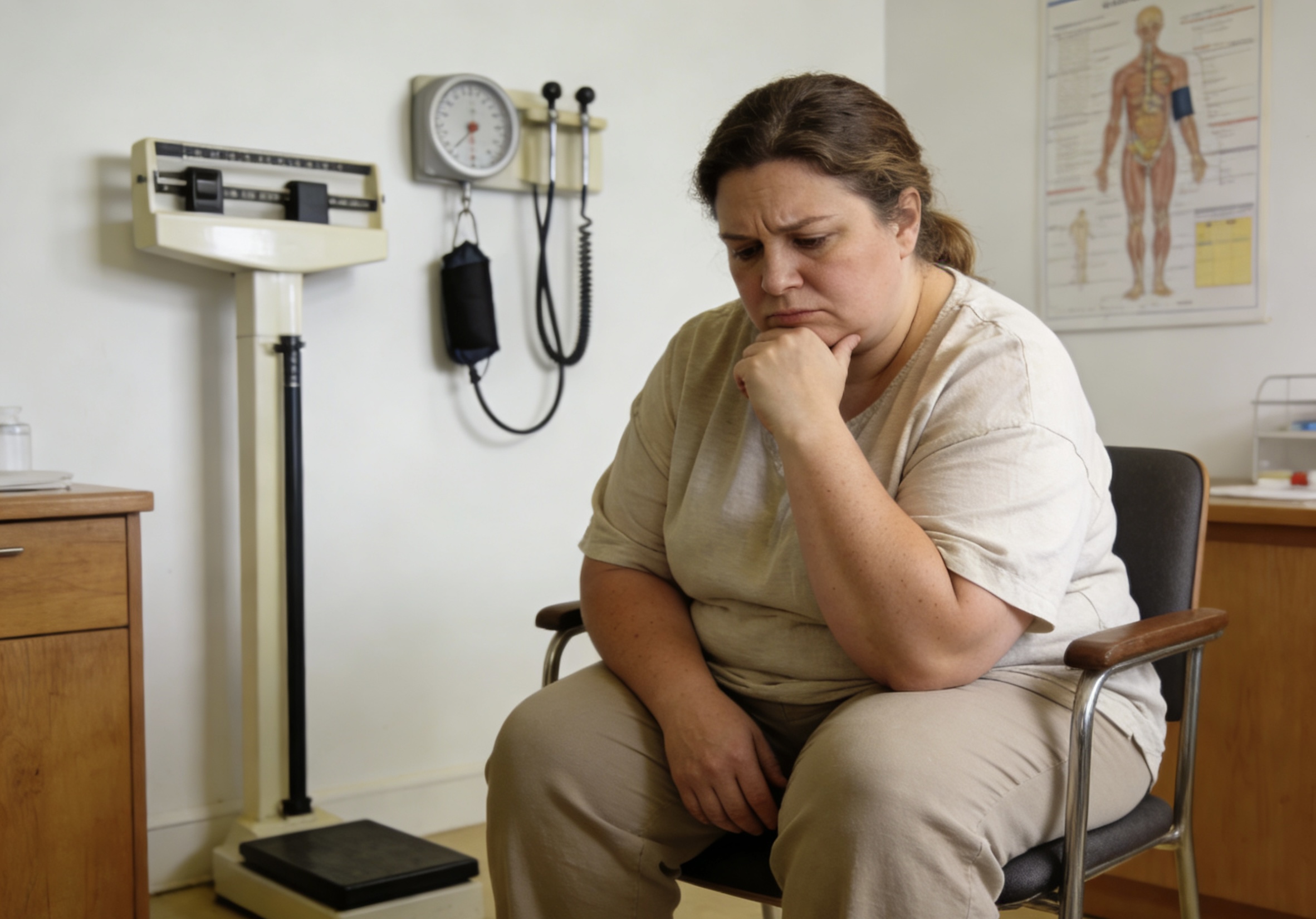
This article delves into the root causes of obesity and analyzes the three levels of physical appearance, emphasizing the importance of a strong physical foundation. The book advocates a "documentary-style weight loss method," offering a scientific approach to weight loss that requires no strenuous exercise and is easy to maintain, helping readers address obesity at its source and reshape a healthy image.
2026-03-26
The Dieting Method: A Natural Weight Loss Strategy Without Deliberate Dieting
This article introduces the core "launch" stage of the journaling weight loss method, which involves recording your daily diet and weight to achieve natural weight loss without conscious dieting. This method emphasizes self-awareness, helping you unconsciously avoid weight-gaining behaviors, easily initiating scientific weight loss, and is suitable for long-term adherence and health management.
2026-03-26
The Record-Based Weight Loss Method: Start Your Weight Loss Journey in the Initial Stage – No Dieting Required
This article details the "start-up" phase of the journaling-based weight loss method, which allows you to easily initiate a weight loss plan without dieting by recording your food intake and weight. This method helps you recognize and adjust unconscious weight-gaining behaviors, achieving scientific weight loss. The journaling-based weight loss method is suitable for long-term adherence and is a healthy and effective way to lose weight.
2026-03-26